
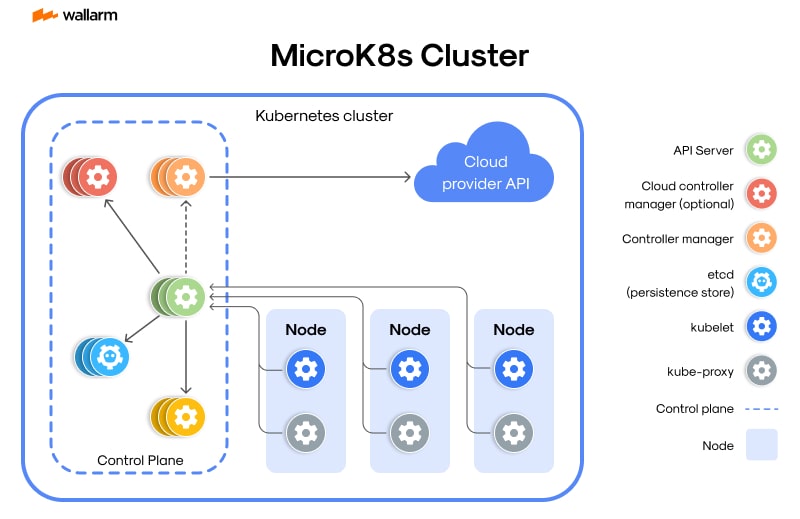
What is K3s and MicroK8s 2?
K3s and MicroK8s 2 are two popular lightweight Kubernetes distributions designed for resource-constrained environments and edge computing. K3s is a highly optimized, certified Kubernetes distribution that can run on a single node, while MicroK8s is a fast, secure, and lightweight Kubernetes distribution for cloud, on-premises, and edge environments. Both distributions aim to simplify the deployment and management of containerized applications.
Main Features
K3s and MicroK8s 2 offer several key features that make them attractive to developers and IT teams, including:
- Lightweight and Resource-Efficient: Both distributions are designed to run on minimal resources, making them ideal for edge computing and resource-constrained environments.
- Easy to Deploy and Manage: K3s and MicroK8s 2 provide simple and intuitive deployment and management experiences, reducing the complexity associated with traditional Kubernetes deployments.
- Highly Secure: Both distributions prioritize security, with features like automatic encryption, secure networking, and robust access controls.
Backup and Restore with K3s and MicroK8s 2
Why Backups Fail at Night
While K3s and MicroK8s 2 provide robust features for deploying and managing containerized applications, backups can still fail due to various reasons, including:
- Insufficient Resources: Inadequate resources, such as CPU, memory, or storage, can cause backups to fail or become corrupted.
- Network Connectivity Issues: Poor network connectivity or connectivity losses can disrupt backup processes, leading to failures or incomplete backups.
- Configuration Errors: Incorrect configuration or misconfigured backup settings can result in failed backups or data loss.
Air-Gapped Copies and Encrypted Repositories Guide
To ensure reliable backups with K3s and MicroK8s 2, follow these best practices:
- Implement Air-Gapped Copies: Store backups in air-gapped environments, such as external hard drives or tape storage, to protect against ransomware and other cyber threats.
- Use Encrypted Repositories: Store backups in encrypted repositories, such as encrypted cloud storage or on-premises storage, to protect against unauthorized access.
- Regularly Test Backups: Regularly test backups to ensure they can be restored successfully and that data is not corrupted.
Installation Guide
Step 1: Prepare the Environment
Before installing K3s or MicroK8s 2, ensure your environment meets the minimum requirements:
- Operating System: Install a compatible operating system, such as Ubuntu or CentOS.
- Hardware Requirements: Ensure your hardware meets the minimum requirements for the chosen distribution.
Step 2: Install K3s or MicroK8s 2
Follow the official installation guides for K3s or MicroK8s 2 to install the distribution:
- K3s Installation: Follow the official K3s installation guide to install the distribution.
- MicroK8s Installation: Follow the official MicroK8s installation guide to install the distribution.
Technical Specifications
K3s Technical Specifications
| Feature | Specification |
|---|---|
| Operating System | Ubuntu, CentOS, or other compatible OS |
| Hardware Requirements | Minimum 2GB RAM, 2 CPU cores, and 10GB storage |
MicroK8s Technical Specifications
| Feature | Specification |
|---|---|
| Operating System | Ubuntu, CentOS, or other compatible OS |
| Hardware Requirements | Minimum 2GB RAM, 2 CPU cores, and 10GB storage |
Pros and Cons
K3s Pros and Cons
- Pros: Lightweight, easy to deploy and manage, highly secure.
- Cons: Limited scalability, limited support for certain features.
MicroK8s Pros and Cons
- Pros: Fast, secure, and lightweight, easy to deploy and manage.
- Cons: Limited scalability, limited support for certain features.
FAQ
Q: What is the difference between K3s and MicroK8s 2?
A: K3s and MicroK8s 2 are both lightweight Kubernetes distributions, but they have different design centers and feature sets.
Q: How do I download K3s and MicroK8s 2 for free?
A: You can download K3s and MicroK8s 2 for free from their official websites.
Q: What is the alternative to K3s and MicroK8s 2?
A: There are several alternatives to K3s and MicroK8s 2, including other lightweight Kubernetes distributions and traditional Kubernetes deployments.