
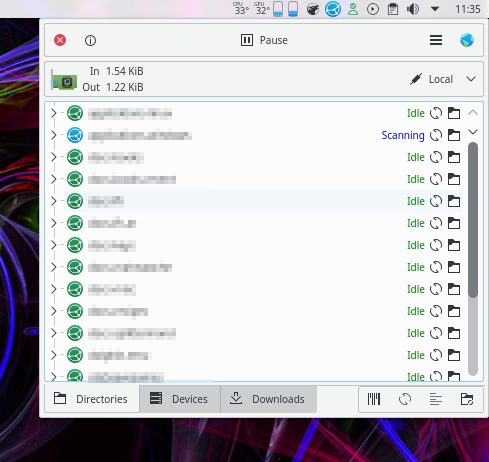
What is Syncthing?
Syncthing is a free, open-source, peer-to-peer file synchronization tool that allows users to synchronize files across multiple devices. It is designed to be a decentralized, secure, and reliable solution for backing up and sharing files. With Syncthing, users can create a network of devices that can share and synchronize files, without relying on a central server or cloud service.
Main Features
Syncthing offers several key features that make it a popular choice for file synchronization and backup. Some of the main features include:
- Decentralized architecture: Syncthing uses a peer-to-peer architecture, which means that there is no central server or single point of failure.
- End-to-end encryption: Syncthing uses TLS encryption to ensure that all data is encrypted in transit.
- Real-time synchronization: Syncthing synchronizes files in real-time, ensuring that all devices have the latest version of the files.
- Conflict resolution: Syncthing has built-in conflict resolution, which ensures that files are not overwritten or lost during synchronization.
Installation Guide
Step 1: Download Syncthing
To get started with Syncthing, you will need to download the software from the official website. Syncthing is available for Windows, macOS, and Linux.
Step 2: Install Syncthing
Once you have downloaded Syncthing, you can install it on your device. The installation process is straightforward and requires minimal configuration.
Step 3: Configure Syncthing
After installing Syncthing, you will need to configure it to connect to other devices. This involves creating a Syncthing ID and adding devices to your network.
Technical Specifications
System Requirements
Syncthing has minimal system requirements, making it a great option for older devices or devices with limited resources.
| Operating System | Windows | macOS | Linux |
|---|---|---|---|
| Minimum RAM | 512 MB | 512 MB | 256 MB |
| Minimum CPU | 1 GHz | 1 GHz | 1 GHz |
Pros and Cons
Pros
Syncthing has several advantages that make it a popular choice for file synchronization and backup. Some of the pros include:
- Decentralized architecture: Syncthing’s peer-to-peer architecture makes it a secure and reliable solution.
- End-to-end encryption: Syncthing’s encryption ensures that all data is protected in transit.
- Real-time synchronization: Syncthing’s real-time synchronization ensures that all devices have the latest version of the files.
Cons
While Syncthing has several advantages, it also has some limitations. Some of the cons include:
- Steep learning curve: Syncthing can be complex to set up and configure, especially for users who are new to file synchronization.
- Limited support: Syncthing is a free, open-source solution, which means that support can be limited.
FAQ
What is Backup Dedupe?
Backup dedupe, also known as data deduplication, is a process that eliminates duplicate copies of data, reducing storage requirements and improving backup efficiency.
How Does Syncthing Handle Backup Verification and Recovery Testing?
Syncthing has built-in features for backup verification and recovery testing, ensuring that backups are complete and can be restored in case of a disaster.
How Does Syncthing Compare to Veeam Agent?
Syncthing and Veeam Agent are both file synchronization and backup solutions, but they have different architectures and features. Syncthing is a decentralized, peer-to-peer solution, while Veeam Agent is a centralized solution that relies on a single server.
Can I Download Syncthing for Free?
Yes, Syncthing is a free, open-source solution that can be downloaded from the official website.
Troubleshooting Failed Backups
Common Issues
Failed backups can occur due to a variety of reasons, including network connectivity issues, device conflicts, and software bugs.
Troubleshooting Steps
To troubleshoot failed backups, follow these steps:
- Check network connectivity: Ensure that all devices are connected to the network and can communicate with each other.
- Verify device configuration: Ensure that all devices are configured correctly and have the latest version of Syncthing.
- Check for software bugs: Check the Syncthing logs for any errors or bugs that may be causing the backup to fail.